Most people know about wisdom teeth getting stuck. But canine teeth? That surprises people. Yet an impacted canine tooth is one of the more common dental issues orthodontists and oral surgeons deal with – especially in children and teenagers.
If you or your child has been told that a canine tooth isn’t coming in the way it should, this article breaks down what that actually means, what the treatment involves, and what to expect along the way.
What Does It Mean When a Canine Tooth Is Impacted?
A canine tooth – sometimes called a fang or maxillary canine – is the pointed tooth that sits between your incisors and premolars in the dental arch. These teeth play a big role in how your jaw bites and how your smile looks. When they fail to erupt properly through the gums and take their correct place in the mouth, they’re considered impacted.
Tooth impaction happens when something blocks the tooth’s path. That could be a baby tooth that didn’t fall out on time, overcrowding, an ectopic tooth (one growing in the wrong direction), or occasionally a condition called hyperdontia, where extra teeth crowd the area.
Unlike a wisdom tooth, which dentists often recommend removing when impacted, the canine tooth is too important to extract unless absolutely necessary. It anchors your bite, supports the lip, and contributes to the structure of your dental arch.
How Is an Impacted Canine Diagnosed?
Your dentist will usually catch this issue during a routine evaluation, often through X-rays. The diagnosis considers the tooth’s position and angle, as well as whether it is putting pressure on neighboring teeth such as the maxillary lateral incisor or other molars.
Catching this early – ideally when a child is between 10 and 13 years old – gives the best chance for successful treatment through orthodontics alone or a combination approach with oral surgery.
What Are the Impacted Canine Treatment Options?
Treatment typically involves a coordinated effort between an orthodontist and an oral and maxillofacial surgeon. Here’s how the process generally unfolds.
Step 1: Orthodontic Preparation
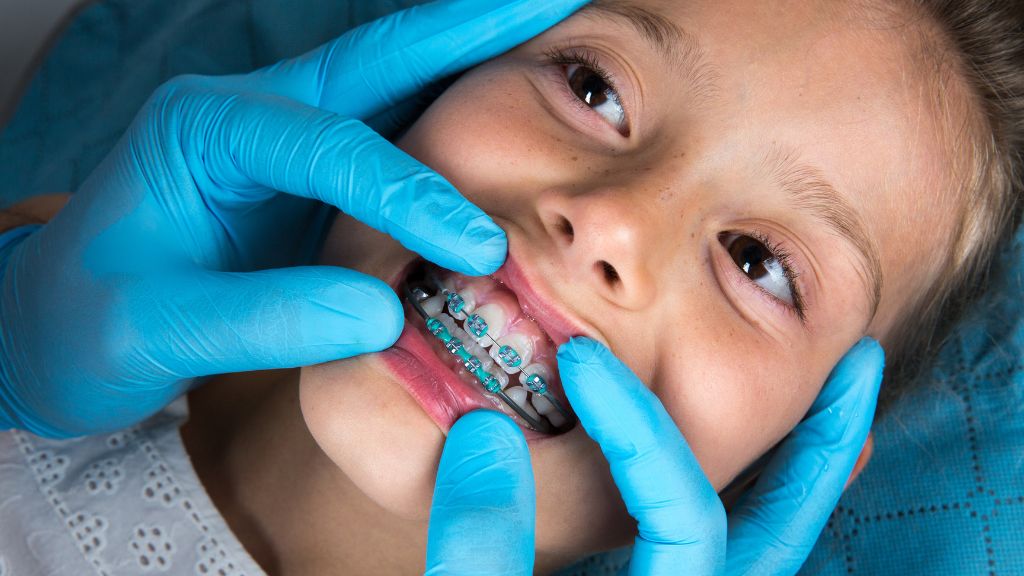
If there isn’t enough space in the dental arch for the canine tooth to come through, dental braces or other orthodontic appliances are used to create room. This phase may take several months before surgery is even considered.
Step 2: Surgical Exposure
Once space is ready, an oral surgeon exposes the impacted tooth. This is a minor surgical procedure performed in-office under local anesthetic or IV anesthesia, depending on patient comfort and the complexity of the case.
The surgeon makes a small opening in the gum tissue overlying the tooth. In some situations, a small amount of bone may need to be gently moved. A bracket, often attached to a small gold chain, is then bonded directly to the exposed tooth surface.
Step 3: Guided Eruption With Orthodontics
After surgery, the orthodontist attaches the chain to the braces and gradually applies light tension to guide the tooth into its correct position over time. This process can take anywhere from several months to over a year depending on how far the tooth needs to travel.
What Happens During Recovery After Impacted Canine Surgery?
Most patients experience manageable discomfort after the procedure. Edema (swelling) and some bleeding are normal in the first day or two. Gauze pressure helps with initial bleeding, and your surgeon will provide guidance on how long to use it.
Pain is typically controlled with an analgesic – often an over-the-counter medication like ibuprofen. In some cases, a short course of prescription medication may be provided, though opioid prescriptions for this type of procedure are uncommon when managed well.
Soft foods, avoiding strenuous activity, and following your surgeon’s post-op instructions will support smooth tissue healing.
What Happens If an Impacted Canine Is Left Untreated?
Leaving the tooth alone can lead to more serious problems. Tooth resorption – where the roots of nearby teeth are damaged – is one significant risk. The impacted tooth can also shift into a position that harms other teeth or becomes increasingly difficult to treat with standard orthodontics.
Early diagnosis and action protect the surrounding teeth and preserve the long-term health of your bite and smile.
What to Expect From Impacted Canine Treatment
An impacted canine tooth sounds complicated, but treatment is well-established and manageable when handled by the right team. The process takes patience, but the outcome – a fully functional tooth in the right place – is worth it. If you or your child has been told a canine tooth isn’t coming in properly, don’t wait on it. Learn more about what treatment involves by visiting the Impacted Canines service page, or call CTX Oral Surgery and Dental Implants at 512-737-3266 or 254-773-4444 to schedule a consultation.