Not all dental implants are the same, and that surprises a lot of people. Most patients walk into a consultation assuming there is one standard implant that works for everyone. The reality is more nuanced – and more interesting. The type of implant recommended for you depends on your bone structure, your health history, how many teeth you are replacing, and where in the mouth those teeth are located.
Understanding the main types of dental implants can help you ask better questions, feel more confident in your care, and make sense of the treatment plan your surgeon recommends.
What Makes Dental Implants Different From Each Other
At their core, all dental implants serve the same purpose: to act as an artificial tooth root that supports a crown, bridge, or full arch of teeth. But the way they are placed, where they sit in the jaw, and what anatomy they rely on can vary significantly.
The most meaningful differences between implant types come down to placement location – whether the implant goes into the jawbone, under the gum tissue, or even into a completely different bone structure like the cheekbone. These distinctions matter most when a patient has experienced significant bone loss or has anatomical limitations that rule out the most common approach.
Endosteal Implants: The Most Common Type
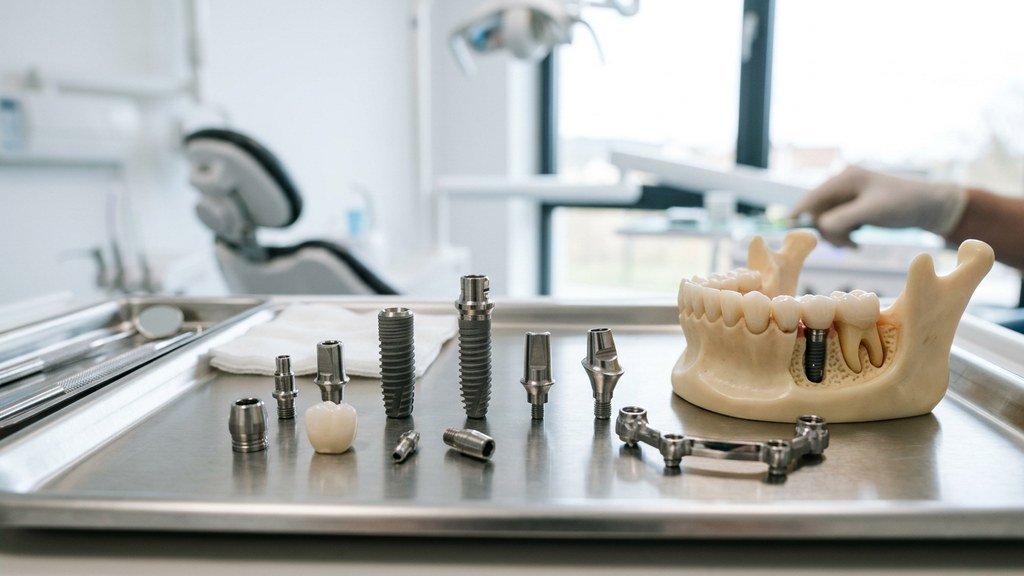
Endosteal implants are what most people picture when they think of a dental implant. These small titanium posts are surgically placed directly into the jawbone, where they fuse with the surrounding bone over a period of several months through a process called osseointegration.
Once that fusion is complete, an abutment and crown are attached on top, creating a restoration that looks and functions like a natural tooth. Endosteal implants are the gold standard for single-tooth replacement and are also used in implant-supported bridges and implant-retained dentures.
For endosteal implants to work well, a patient needs adequate jawbone density and volume to support the post. Patients who have experienced bone loss due to long-term tooth absence, gum disease, or trauma may need a bone graft before they qualify as candidates – a preparatory step that is quite common and manageable.
Subperiosteal Implants: A Solution for Limited Bone
Subperiosteal implants take a fundamentally different approach. Instead of going into the jawbone, this type of implant sits on top of the bone but beneath the gum tissue. A metal framework is custom-fitted to the shape of the patient’s jaw, and posts extend through the gums to hold a prosthetic in place.
This option was developed specifically for patients who do not have enough bone height or density for traditional endosteal implants, and either cannot or do not want to undergo bone grafting. While subperiosteal implants are less commonly used today than they were in previous decades – largely because bone grafting techniques have advanced considerably – they remain a legitimate option in select cases.
If you have significant bone loss and are worried you may not be a candidate for implants, this is worth discussing with your surgeon. There are more options available than many patients realize.
Zygomatic Implants: For Severe Upper Jaw Bone Loss
Zygomatic implants are among the most specialized tools in implant dentistry, and they are reserved for patients with severe bone loss in the upper jaw. Rather than anchoring into the maxilla (the upper jawbone), zygomatic implants anchor into the zygomatic bone – also known as the cheekbone – which is denser and more stable even when the jaw itself has deteriorated significantly.
These implants are considerably longer than standard implants and require a surgeon with advanced training to place them safely. The procedure is more complex, but for patients who have been told they are “not candidates” for traditional implants due to bone loss, zygomatic implants can be life-changing.
According to research published through the International Congress of Oral Implantologists, zygomatic implants have demonstrated strong long-term success rates in appropriately selected patients, making them a reliable option in experienced surgical hands.
Mini Implants: Smaller Posts, Specific Uses
Mini dental implants are roughly half the diameter of standard implants. Because they are narrower, they can sometimes be placed in areas where bone volume is limited, and they typically require less healing time.
Mini implants are most often used to stabilize lower dentures in patients who cannot tolerate conventional implant surgery, or in situations where the bone is too narrow for a standard-sized post. They are not typically recommended for replacing individual teeth that bear significant biting force, as their smaller size can limit load-bearing capacity over time.
They are a practical solution in the right context – but not a universal shortcut. A qualified surgeon will help you understand whether mini implants are genuinely suited to your needs or whether a more robust option would serve you better long-term.
Implant-Supported Dentures and Full Arch Options
For patients replacing an entire arch of teeth – upper, lower, or both – implant-supported options offer a major upgrade over traditional removable dentures. Rather than relying on adhesive or suction, these restorations attach securely to implants placed in the jaw.
The All-on-4 approach is one of the most well-known full-arch solutions. It uses four strategically angled implants to support a complete set of teeth, often without requiring bone grafting. This makes it accessible to many patients who might otherwise be poor candidates for individual implants. If you want to understand exactly what goes into this process from start to finish, the full arch tooth replacement process at CTX Oral Surgery and Dental Implants walks through each stage in detail.
How Surgeons Determine Which Implant Is Right for You
There is no one-size-fits-all answer in implant dentistry, and any practice that treats it that way is cutting corners. A thorough evaluation includes a review of your dental and medical history, 3D imaging of your jaw structure, and an honest conversation about your goals, your timeline, and your budget.
Board-certified oral and maxillofacial surgeons are specifically trained to assess complex anatomy and recommend the implant type that offers the best long-term outcome for your situation. At CTX Oral Surgery and Dental Implants in Georgetown and Temple, TX, that evaluation is approached with the same level of care whether a patient needs a single endosteal implant or a full-arch zygomatic solution.
The most important thing to understand is that having bone loss, prior failed dental work, or complicated anatomy does not automatically disqualify you. Modern implant options have expanded significantly, and an experienced surgical team can often find a path forward when a general dentist may have said one does not exist.
Frequently Asked Questions
What is the most common type of dental implant?
Endosteal implants are the most widely used. They are placed directly into the jawbone and are suitable for most patients who have sufficient bone density.
Can I get implants if I have bone loss?
In many cases, yes. Depending on the severity, options include bone grafting followed by endosteal implants, subperiosteal implants, zygomatic implants, or the All-on-4 approach. A surgical evaluation will clarify which path makes sense for your anatomy.
Are zygomatic implants safe?
When placed by a surgeon with appropriate training and experience, zygomatic implants have a strong clinical track record. They are a specialized procedure – not appropriate for general dental offices – but they are a well-documented solution for severe upper jaw bone loss.
How long do dental implants last?
Endosteal implants, when properly cared for, can last decades or even a lifetime. The longevity of other implant types depends on placement, bone quality, and oral hygiene habits.
Your Next Step Toward a Stronger, More Complete Smile
Understanding your options is the first step – but the real clarity comes from sitting down with a surgeon who can look at your specific anatomy and give you an honest assessment. Whether you are exploring a single tooth replacement or wondering if full-arch implants are within reach, getting the right information early saves time, money, and stress later.
For a deeper look at implant options and what the process involves, explore our comprehensive guide to dental implants or call CTX Oral Surgery and Dental Implants at 512-737-3266 (Georgetown) or 254-773-4444 (Temple) to schedule your consultation.