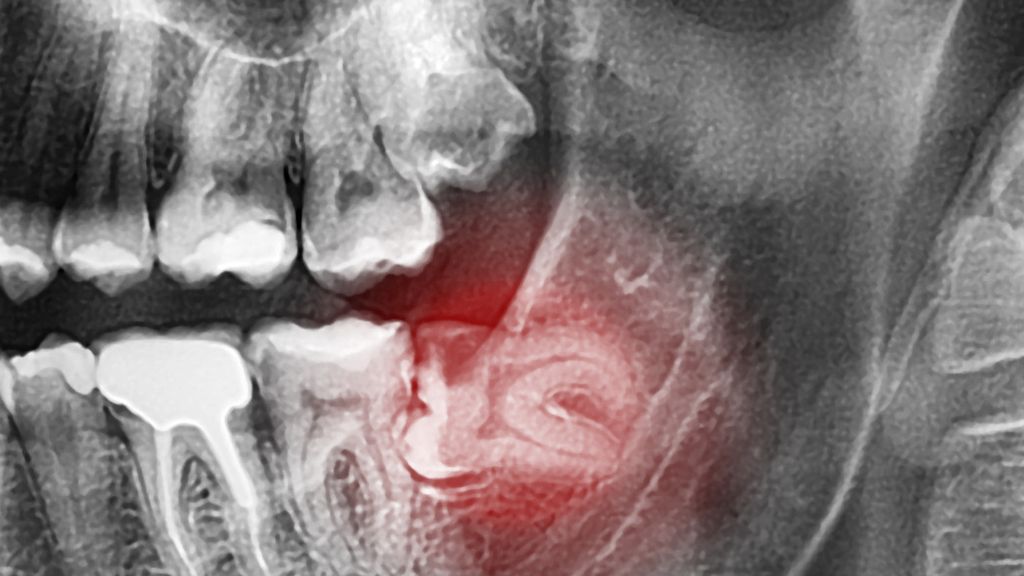
Wisdom teeth, formally called third molars, are the final set of molars to emerge at the back of the mouth. They typically develop between the ages of 17 and 25, though timing varies from person to person. For some, wisdom teeth come in without issue; for others, they can lead to complications such as impaction, crowding, infection, or damage to neighboring teeth.
Why Do We Have Wisdom Teeth?
Wisdom teeth are an evolutionary remnant. Our early ancestors had larger jaws and a rougher diet, think raw meat, nuts, and roots, that wore down teeth quickly. A third set of molars helped them continue chewing effectively. Today, our jaws are smaller and our diets far softer, leaving little room for these late-arriving teeth. The result? They often cause more problems than they solve.
Common Wisdom Teeth Complications
Not everyone will experience issues, but wisdom teeth complications are extremely common. Here’s what to watch for:
- Impaction: When there isn’t enough space for the tooth to fully emerge, it can become trapped beneath the gum or bone, causing pain and pressure.
- Crowding: An incoming wisdom tooth can push against neighboring teeth, shifting your bite over time.
- Infection: Partially erupted wisdom teeth create pockets where bacteria can accumulate, leading to a painful infection called pericoronitis.
- Cysts or damage: In some cases, an impacted tooth can develop a cyst around it, potentially damaging surrounding teeth and bone.
How Do You Know If Your Wisdom Teeth Need to Come Out?
Some people never have any symptoms at all, their wisdom teeth quietly emerge without causing trouble. Others notice signs like jaw pain or stiffness, swollen or tender gums at the back of the mouth, difficulty opening the mouth fully, or a persistent bad taste or odor near the back teeth. If you’re experiencing any of these, it’s worth scheduling an evaluation. Your dentist or oral surgeon will take X-rays to assess the position of your wisdom teeth and whether removal is the right course of action.
What Happens If You Leave Them In?
If your wisdom teeth are healthy, fully erupted, and easy to clean, there may be no need to remove them. However, monitoring them over time is still important, as problems can develop gradually without obvious symptoms. For wisdom teeth that are impacted or causing complications, leaving them untreated can lead to worsening pain, infection, or long-term damage to surrounding teeth and bone.
The Bottom Line
Wisdom teeth are a normal part of development, but they don’t always play nicely with the rest of your mouth. Understanding what they are and what complications to look for puts you in a much better position to make informed decisions about your oral health. If you’re unsure about the status of your wisdom teeth, the best first step is a conversation with a qualified oral surgeon.
Ready to Take the Next Step?
At CTX Oral Surgery & Dental Implants, our mission is simple: to provide exceptional care with empathy, dedication, and a commitment to excellence. Whether you’re dealing with discomfort or just want to know where your wisdom teeth stand, our board-certified oral and maxillofacial surgeons are here to guide you every step of the way.