If you have been told you have gum disease and assumed that dental implants were no longer an option for you, you are not alone. Many patients hear this and believe the door has closed on restoring their smile. The good news is that it has not. Treating periodontal disease first actually opens that door.
What Gum Disease Actually Does to Your Mouth
Periodontal disease is a bacterial infection of the gums and the bone supporting your teeth. It starts quietly, often as gingivitis, with symptoms like bleeding on probing, mild inflammation, and dental plaque buildup along the gumline.
Left untreated, it progresses deeper into the gum tissue and periodontal pockets, breaking down soft tissue and bone. This leads to tooth mobility, calculus deposits, and eventually tooth loss. The same bacteria that destroy natural teeth can threaten dental implants too, which is why treating the disease first is non-negotiable.
Can You Still Get Dental Implants With a History of Gum Disease?
Yes, but timing matters. The key is getting periodontal disease under control before any implant surgery begins. Once the infection is brought under control and your gums are stable, implant placement becomes a viable and often excellent option.
Oral and maxillofacial surgeons routinely treat patients who have a history of periodontal disease. The condition itself is not disqualifying. Active, uncontrolled disease is the real barrier.
Why Active Infection Is a Problem for Implants
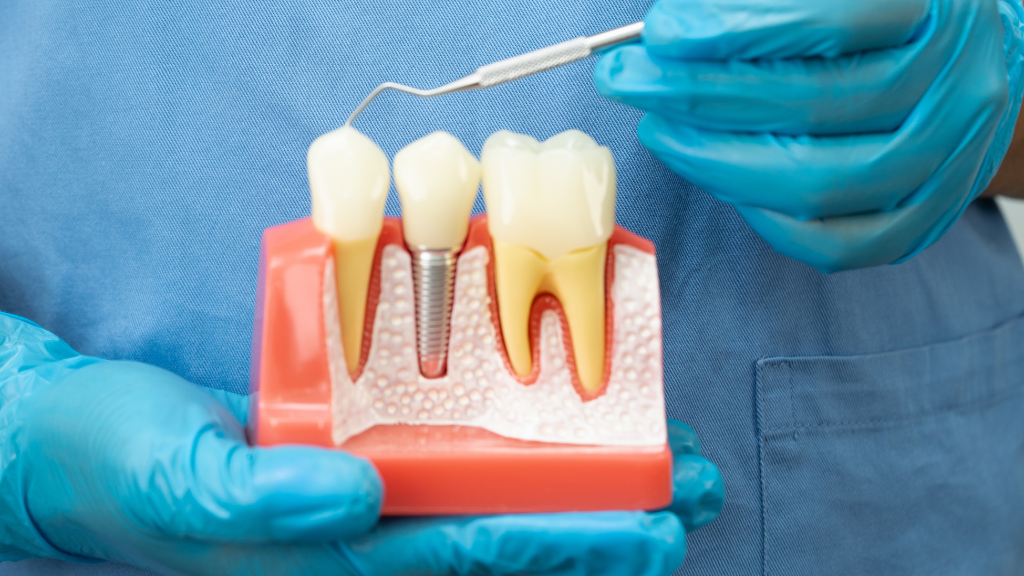
A dental implant relies on a process called osseointegration, where the implant fuses with the jawbone over several months. If harmful bacteria are still present in the mouth during this process, they can interfere with healing and cause implant failure.
Placing an implant into an infected environment also puts the patient at risk for peri-implantitis, which is essentially gum disease around an implant. Peri-implant mucositis is its earlier, more reversible form, similar to gingivitis around natural teeth.
How Gum Disease Is Treated Before Implant Placement
The treatment path depends on how advanced the disease has become. A thorough exam, including X-rays and, in some cases, cone beam computed tomography imaging, helps surgeons map out the anatomy of the jaw, the extent of bone loss, and what therapy is needed.
For many patients, the first step is scaling and root planing, a deep cleaning procedure that removes calculus and bacteria from below the gumline. This non-surgical therapy often dramatically reduces pocket depth and inflammation.
More advanced cases may require surgical intervention. Laser therapy, tissue grafting, or other periodontal procedures may be recommended to restore gum health and support bone health before implants are considered.
When Bone Grafting Enters the Picture
Periodontal disease does not just affect the gums. It destroys the bone that holds your teeth in place. After tooth extraction or significant bone loss, there may not be enough bone volume to securely support a dental implant.
This is where bone grafting becomes an important part of the treatment plan. A graft rebuilds the area by adding bone material, sometimes supported by a barrier membrane, which guides the growth of new bone tissue. A sinus lift may also be needed in cases involving the upper jaw.
The board-certified oral and maxillofacial surgeons at CTX Oral Surgery and Dental Implants are experienced in these procedures and use modern technology to help patients who were once told they were not candidates for implants.
Factors That Affect Your Candidacy
Beyond gum disease, a few other factors come into play when evaluating whether implants are right for you.
Smoking is a significant risk factor for both periodontal disease progression and implant failure. Smoking cessation before surgery can improve outcomes meaningfully. Certain medications and conditions like osteoporosis can also affect bone healing and how the immune system responds after surgery.
Oral hygiene habits matter too. Consistent tooth brushing and dental floss use help keep bacteria levels low and protect both healing tissue and long-term implant success. Your surgeon will walk you through what to expect and how to prepare.
What to Expect at Your Consultation
Your first appointment will focus on understanding your full dental history, current gum health, and overall medical background. Imaging like cone beam computed tomography gives surgeons a detailed three-dimensional view of your mandible, bone density, and surrounding anatomy.
From there, a staged treatment plan is created. Gum disease is treated first. Once healing is confirmed and the mouth is stable, implant surgery is scheduled. The process takes time, but the outcome, a stable, lasting tooth replacement, is well worth it.
Patients who have worn dentures for years, experienced tooth loss from periodontal disease, or have been turned away elsewhere often find that a proper evaluation changes everything.
Your Path to Dental Implants After Gum Disease
Gum disease does not automatically rule out dental implants. It simply means treatment comes first. Once your gums are healthy and your bone is ready, implants become a real and reliable option. If you have been living with missing teeth or damage from periodontal disease, reach out to the team at CTX Oral Surgery and Dental Implants to learn more about bone grafting and how it supports successful implant placement. Call 512-737-3266 or 254-773-4444 to schedule your consultation.